Questions to ask at your interview
The best job interviews aren’t one-sided interrogations but rather two-way conversations designed to let both sides figure out if they’d be a good fit.


Enter your details and we'll take you straight to the download. We'll also email you a copy.
The best job interviews aren’t one-sided interrogations but rather two-way conversations designed to let both sides figure out if they’d be a good fit.Since your goal shouldn’t be just to get a job offer but to land in a position in which you’ll thrive and in an environment, you won’t dread as you come to work every day, you should be interviewing the interviewer right back.Asking the right questions shows a level of thoughtfulness and engagement. After all, your interviewer wants to know that you’re interested in the details of the job, the department you’ll be working in, your prospective supervisor’s management style, and the culture of the organization. Otherwise, you risk signalling that you’re either not that interested or just haven’t thought very much about it.
Here are 10 questions to consider asking
- Why is this position open?
- What are the biggest challenges or obstacles the person in this position will face?
- Can you describe a typical day or week in the position?
- What would a successful first year in the position look like?
- How will the success of the person in this position be measured?
- Thinking back to the person whom you’ve seen do this job best, what made their performance so outstanding?
- How would you describe the culture here?
- How would you describe your management style?
- Are there reservations you have about my fit for the position? (This is a great way to give yourself the chance to tackle any doubts they might have about you—as well as for you to consider whether those doubts might be reasonable and point to a bad fit.)
- When do you expect to make a hiring decision?
Enter your details and we'll take you straight to the download. We'll also email you a copy.
Want to talk about what this means for you?
Where talent meets opportunity





Our latest articles
The Strategy and Transformation Hiring Index closed Q2 2026 at 39 - its highest reading since October 2023. This has been driven primarily by freelance hiring demand in Private Equity, but momentum in corporate and advisory is also growing.
We’ve seen a structural shift in the composition of demand over those 2.5 years, with companies preferring to bring in expertise on an interim basis. A second shift is visible in the mandates themselves - a quarter of the roles that went live with us in Q2 2026 mention AI in the job description, against roughly one in six a year ago.


Fifty people, one former CEO of Xero, Apple Asia Pacific, Ninemsn and Microsoft ANZ. The Movemeon Group brought together a small group of clients, network members and friends of the firm in Sydney for a fireside chat between Steve Vamos and Movemeon co-founder Richard Rosser, introduced and closed by Pete Clifton-Smith (GM APAC, The Movemeon Group), with closing remarks from Richard Whiteoak (MD, Whiteoak Private Equity).
The brief was simple: what does it actually take to lead, and to lead well, through constant disruption? What followed was one of the clearest, most practical breakdowns of the CEO role that anyone in the room had heard.

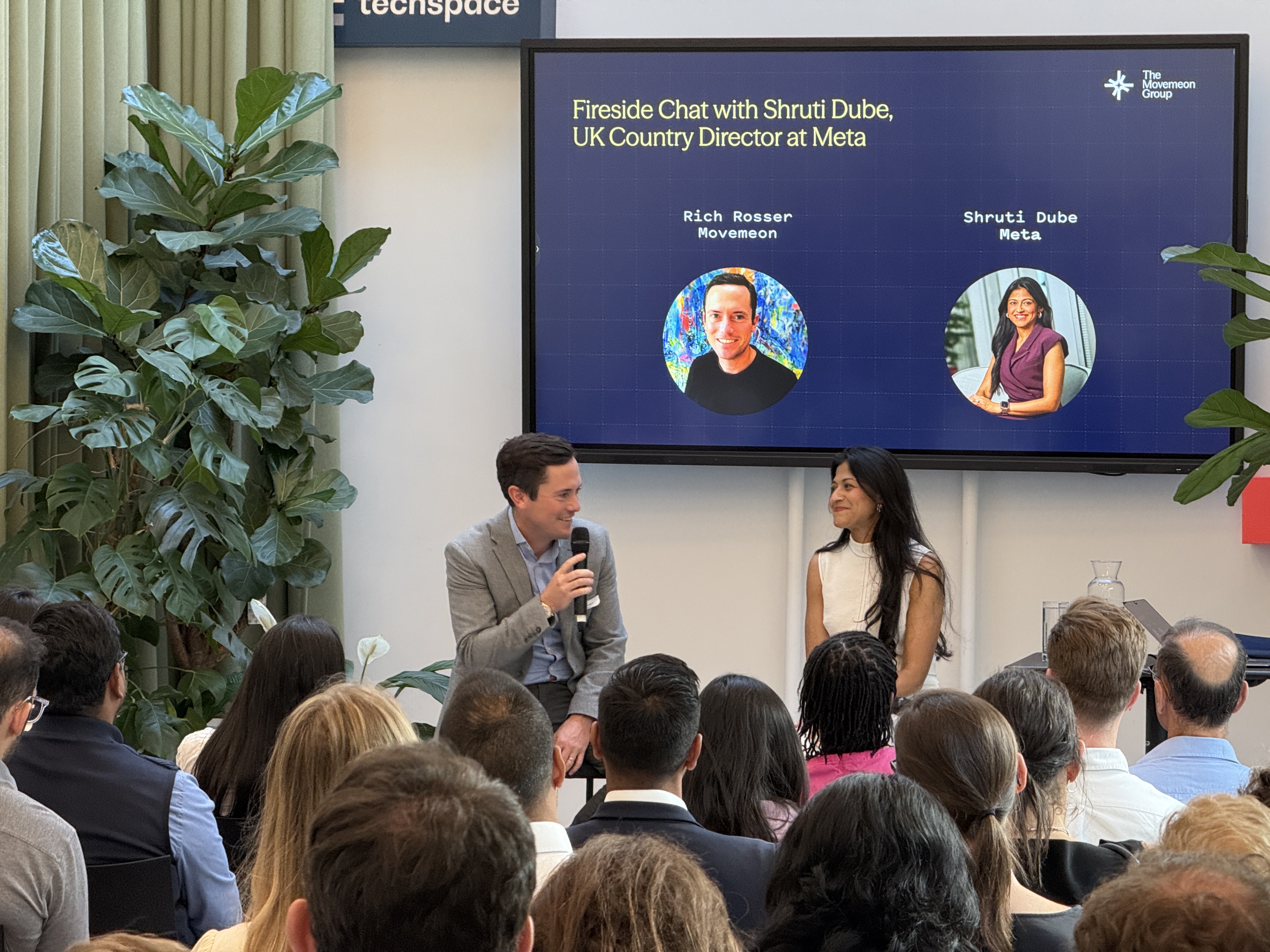
Meta UK's chief exec (ex-McKinsey, ex-Sequoia) shares a career framework built on rising complexity and expanding influence rather than titles, plus advice to stay close enough to real work to catch mistakes, including bad AI outputs. She ties this to Meta's strategy: WhatsApp agents aim to restore personal trust at scale, AI is expanding jobs rather than cutting them, and targeted fixes beat blanket bans.
Join our ecosystem to discover unique opportunities and advice
100,000+