EU Pay Transparency Directive: What employers need to know
The EU Pay Transparency Directive introduces new rules requiring employers to provide greater transparency around pay, including salary ranges in job postings and reporting on gender pay gaps. It aims to reduce pay inequality across the European Union by giving employees clearer information and stronger rights to challenge unfair pay practices.


Table of contents
Tags


Subscribe to our Newsletter
In May 2023, the European Union adopted the Pay Transparency Directive, a major step toward ensuring equal pay for equal or equivalent work for all employees across the EU.¹
From 7 June 2026, all employers operating in the EU will be required to comply with the directive’s new transparency and reporting obligations. For organisations hiring within the EU (and potentially across borders), this represents a structural shift in how hiring, pay, and internal information are managed, rather than simply a compliance exercise.
But as of January 2026, nine out of 27 countries have not yet taken any action toward implementing the directive, according to the Addleshaw Goddard’s implementation tracker.²
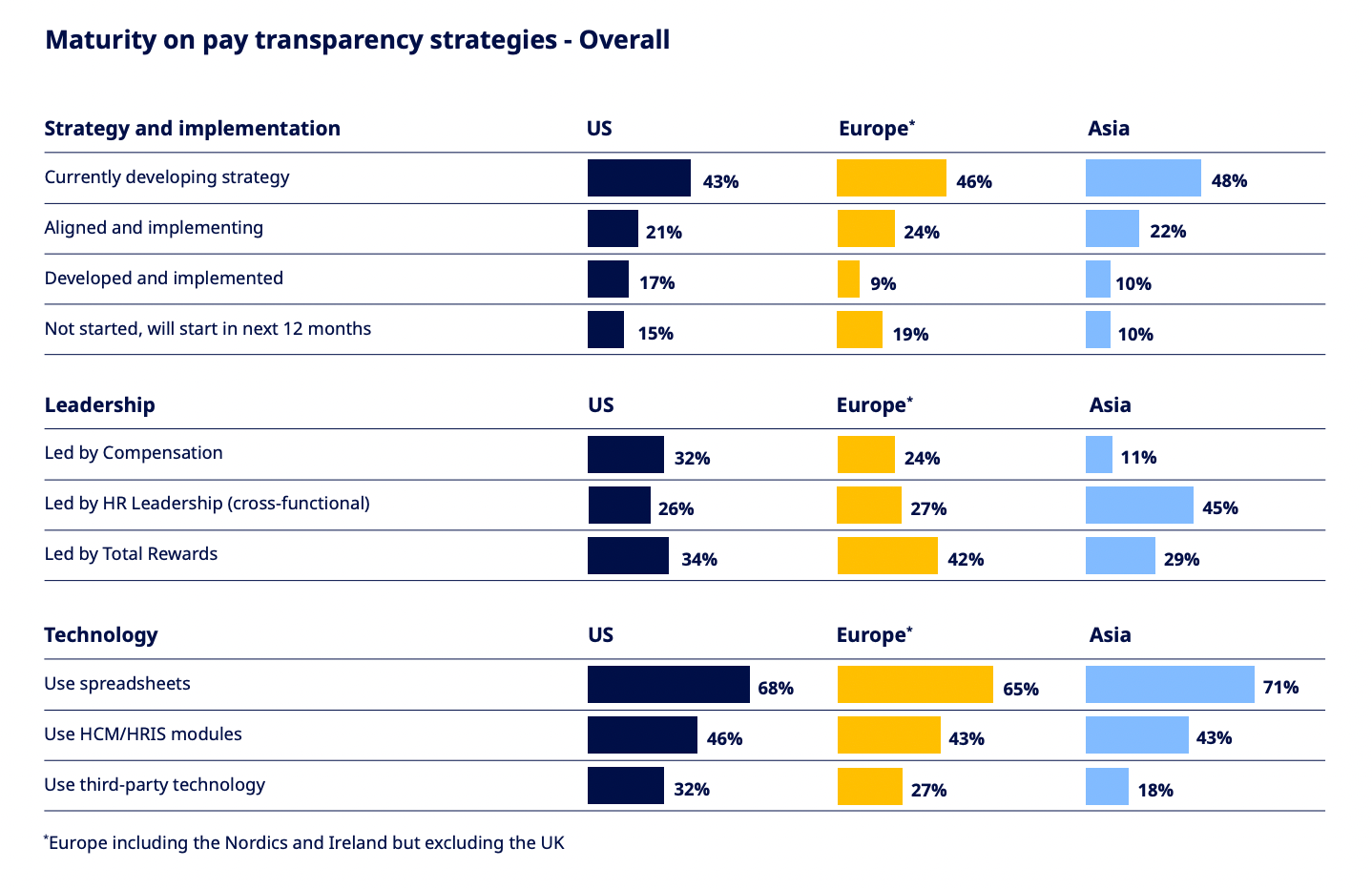
Here’s what HR teams, hiring managers and business leaders need to understand, and act on, before June 2026:
Why it matters now
Persistent pay gaps, such as the gender pay gap, are not just a legal and ethical issue, they impact recruitment competitiveness, employer brand and team morale.
The Directive builds on long-standing equal pay principles in EU law, but significantly raises the bar on transparency and enforcement, including communication, data reporting and employee rights.
In practice, this means:
- Hiring must be transparent from the earliest stages.
- Salary decisions need to be explainable and justifiable.
- Internal systems must be capable of reporting on pay outcomes.
Preparing now gives organisations time to align policy, systems and communications before enforcement deadlines hit.
What employers need to prepare for
- Transparent salary communication
All job postings and offers must include the starting pay or a meaningful salary range. This needs to be shared either on the job description itself or with candidates before interviews take place. You are no longer allowed to ask about past salary history.
- Gender-neutral language in job descriptions
Role titles, descriptions and compensation philosophies must be gender-neutral and free from biased language that could skew hiring outcomes.
- Employee rights to pay data
Employees will have the right to request information on salary ranges and how salaries were determined for colleagues in similar roles.
- Mandatory gender pay data reporting
Organisations with over 100 employees will be required to publish gender pay gap information, with phased reporting requirements depending on size and national implementation.
- Employment contract changes
Employment contracts must not include pay secrecy clauses, and existing contracts may need updating to reflect employee rights to discuss pay with their colleagues.
- Joint pay reviews
Where unexplained pay gaps (typically over 5%) are found, employers may need to undertake joint pay reviews with employee representatives and implement corrective measures.
- Sanctions and burden of proof
In discrimination cases under the Directive, the burden of proof shifts to the employer, making clear documentation and defensible pay processes even more critical.
Practical implications for Hiring Managers & HR
The Directive isn’t just about compliance checkboxes, it changes the rhythm of hiring and talent management:
- Hiring processes must integrate pay transparency early.
- Compensation frameworks need to be standardised and defensible.
- Data systems must be able to generate the required reports.
- Internal communications must prepare managers and employees for greater visibility into pay decisions.
For organisations hiring across multiple EU member states, it’s also critical to track when each country implements the Directive into national law, timelines may vary.
HR readiness checklist: What now?
1. Build transparent foundations
- Document current pay structures, bands and progression criteria.
- Ensure pay decisions are objective, gender-neutral and clearly documented.³
- Equip HR systems to output gender-disaggregated pay data.⁴
2. Reinforce compliant hiring
- Publish salary ranges in job adverts before candidate conversations.⁴
- Remove all salary history questions from recruitment workflows.⁴
- Refresh role descriptions to focus on objective responsibilities and impact, including gender-neutral language.³
3. Equip your people
- Define clear processes for responding to employee pay data requests.⁵
- Communicate employee rights and internal pay policies proactively.⁵
- Update employment contracts to remove pay secrecy clauses.⁶
4. Analyse and report
- Confirm reporting requirements based on headcount (100+).⁴
- Analyse gender pay gap metrics (mean/median; pay quartiles).³
- Identify unexplained gaps early and plan remediation.⁷
5. Align Governance
- Create a cross-functional readiness team (HR, Legal, Payroll, Finance).³
- Secure leadership support and necessary resourcing.
- Document monitoring, review and remediation processes.
Why starting now will pay off
Although the Directive kicks in from June 2026, larger employers may begin reporting as early as 2027, depending on national law. Starting early allows employers to build robust systems, reduce legal risk and strengthen your employer brand, all while embedding pay equity into your talent strategy.
In a competitive hiring environment, employers who embrace transparency will not only comply with the law , they’ll signal fairness and clarity to the talent market, helping them attract and retain top talent across Europe.
At Movemeon, we support thousands of employers every year with their hiring needs across the EU. Get in touch if you would like to find out more.
Footnotes
- Directive (EU) 2023/970 of the European Parliament and of the Council, 10 May 2023. EUR-Lex.
- Addleshaw Implementation Tracker
- Ravio, Preparing for the EU Pay Transparency Directive.
- PwC, EU Pay Transparency Directive – What Employers Need to Know.
- Lewis Silkin, Employee Rights to Pay Information.
- Debevoise & Plimpton, What It Means for Employers.
- Beqom, Directive Readiness.
- Jones Day, Employer Compliance Guide.
Where Talent Meets Opportunity
Our exclusive network use us to find job that fit their skills, and thousands of Employers trust us to hire exceptional talent. Choose the path that matches your goals - start exploring or start hiring.
Our latest articles
We regularly publish up-to-date articles to keep you up-to-date on the market and our work.

The new shape of in-house strategy and transformation teams: Lean central functions, expert flex and on-demand firepower
This article explores how in-house strategy and transformation teams are shifting from large, generalist functions to lean, senior cores supported by on-demand interim expertise.




Join our exclusive global community
Receive exclusive data & insights on pay, benchmarking, and industry interviews to build a career that’s right for you.
Create an account today and start searching roles in under five minutes.


