What we can all learn from Private Equity about talent - McKinsey, HBR and our analysis
Private Equity has become one of the most influential forces in business, outperforming public companies through disciplined value creation and exceptional talent strategy. This article explains how PE achieves its results and why demand for ex-consulting talent is rising across the industry.


Enter your details and we'll take you straight to the download. We'll also email you a copy.
Private Equity companies achieve productivity gains of 8% to 12% in the first two years after their acquisition, far outpacing the 2% to 4% gains that public companies typically see. In this article, we explore the growth of Private Equity as an industry, unpack how these firms achieve such outsized productivity improvements, and deep-dive into the increasingly critical role that ex-consulting talent plays in driving these transformations.
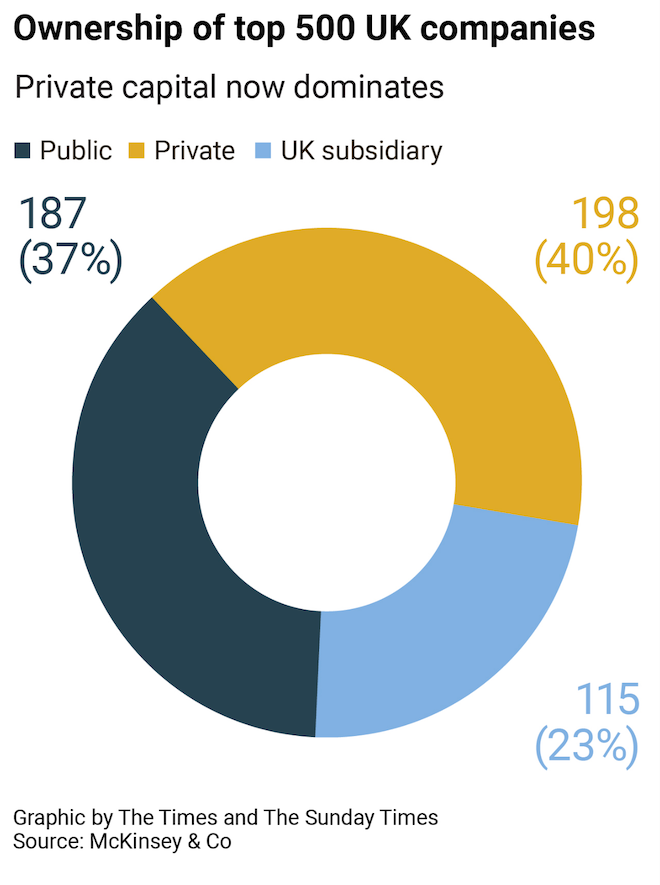
Today, Private Equity owns more of the UK’s largest companies than the public markets do
Private Equity has historically been seen as a niche sector - an alternative ownership structure which has attracted considerable media attention. But this characterisation no longer reflects reality. Over the last two decades, outsized returns have resulted in huge amounts of capital flowing into Private Equity.
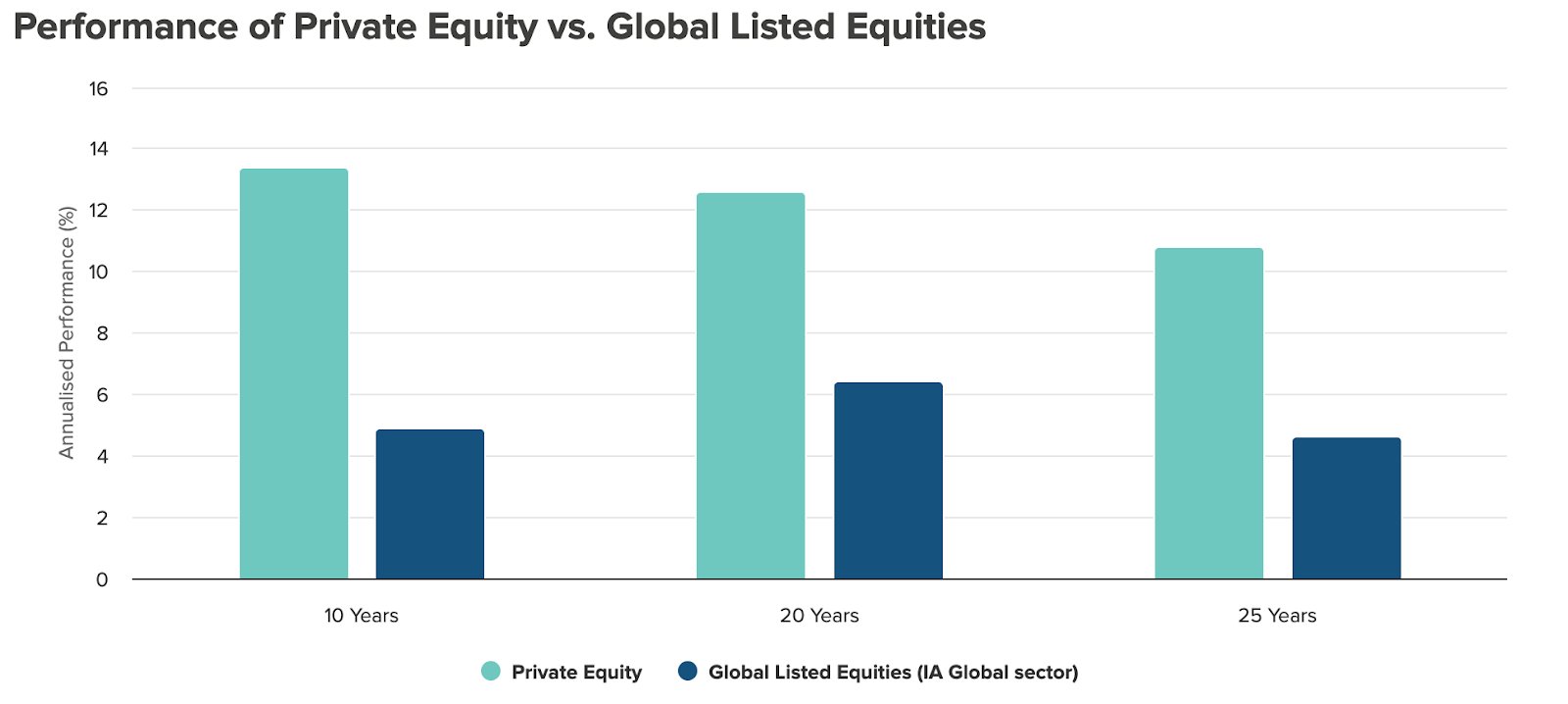
This has seen LPs (investors who contribute capital but do not actively manage the company - typically pension funds, insurance companies, etc.) increase their target allocation to PE from just 6% to over 8%. The result is a significant rise in PE-owned businesses. Of the UK’s largest 500 companies, McKinsey’s analysis shows that more are Private Equity-owned than publicly traded.
The Private Equity model has fundamentally changed
The Private Equity model has also fundamentally evolved. When interest rates were low, the cost of financing leveraged buyouts was extremely low. So funds were able to buy companies, increase the amount of debt at a very low cost, and get the added benefit of offsetting the cost of debt against taxation.
As interest rates have gone from sub 2% to 5%, the economics of this model have fundamentally changed. The cost of servicing the debt has more than doubled - putting much more pressure on the other side of the PE model: operational transformation.
Much focus goes on the PE value-creation levers. Typically they’re reflective of traditional commercial and operational transformation levers and are split into:
Top-line (impacting revenue):
- Commercial effectiveness (pricing, marketing, sales excellence)
- Technology (ERP)
- New markets / new products
Bottom-line (impacting cost):
- Operational effectiveness (lean, ops transformation)
- Cost-out (org design, target operating model)
- Procurement
And Private Equity companies have proved they’re very good at driving these changes: HBR found that PE-backed companies achieve productivity gains of 8% to 12% in the first two years after their acquisition - far outpacing the 2% to 4% gains that public companies typically see.
How does Private Equity achieve 8-12% productivity gains
HBR and McKinsey worked with 120 CEOs to analyse what PE-businesses do differently. They boiled it down to 6 main differences:
1. Conduct Full-Potential Due Diligence Continually
PE-backed firms constantly develop a “momentum case” (do nothing) and a “full potential case” (do everything), and continually re-evaluate priorities.
This ensures that decision-making stays aligned with value creation rather than inertia.
2. Build a Fit-for-Purpose Management Team
The CEO and senior team must deeply reflect the company’s value-creation thesis.
PE firms focus intently on securing talent not only in the C-suite but also one to two levels below, where execution truly happens.
3. Clean-Sheet Labour
Implement robust controls for headcount and prioritise building lean, high-performing teams.
In the PE model, talent density matters far more than organisational size.
4. Eliminate Bad Revenue
Regularly analyse revenue streams and cut unprofitable or low-margin lines that consume resources and dilute focus.
PE firms are unusually disciplined here, and it accelerates performance.
5. Execute Relentlessly
Break the firm’s value-creation thesis into 3-8 workstreams, each containing dozens or hundreds of initiatives.
This level of granularity allows early detection of bottlenecks and ensures momentum.
6. Treat Time as Capital
Boards and PE owners encourage CEOs to regularly analyse how they spend their time, ensuring it aligns with the company’s most critical priorities.
Time is treated as a finite, high-value resource, not a passive input.
Enter your details and we'll take you straight to the download. We'll also email you a copy.
Want to talk about what this means for you?
What role does talent play in this
Central to all six practices is talent.
Ensuring the top 2-3 layers are exceptional and aligned to the value-creation thesis is non-negotiable.
Equally important is the shift from a traditional “talent pyramid” to a “talent density” model: fewer people, higher calibre, faster execution.
So what roles are PE funds hiring ex-consultants for - and why?
1. The key roles - Chief Transformation Officer, Operating Partners and Head of PMO
Private Equity has created some key roles to hold the business, and its Executive Team, accountable for delivery against the Value Creation Plan.
Chief Transformation Officer (CTrO)
A member of the Executive Team, usually part of the Management Incentive Plan, who is responsible for:
- constantly revisiting the strategy
- leading implementation
- holding executives to account
- coaching senior leaders and their teams
- working closely with the Fund to keep alignment tight
Bain analysis found that transformations with a CTrO deliver 24% more impact than those without.
The role has become one of the most important levers for executing high-stakes transformation at pace.
Operating Partner
A fund-level senior role, usually held by an experienced former C-level operator.
Operating Partners typically oversee two portfolio companies and work closely with Boards to ensure:
- the right people are in the right roles
- leaders receive targeted coaching and support
- information flow between the company and the fund is transparent and actionable
They serve as the strategic interface between the Fund and the business and are crucial to maintaining high accountability.
Head of PMO
A dedicated leadership role focused solely on overseeing execution of the Value Creation Plan.
They provide:
- visibility into progress across all initiatives
- structured reporting to the Board
- early identification of blockers and deviations
- the discipline needed to keep dozens (or hundreds) of workstreams moving
The Head of PMO role has grown sharply in importance as transformations become more complex and fast-paced.
2. Leveraging external experts
From the ongoing due diligence and clean sheet labour analyses, there will be regular skillsets and competencies identified that are required to achieve the Value Creation Plan. Private Equity is exceptional at deciding whether these are temporary requirements or ongoing - and for the former, whether an interim or consulting firm is best to achieve impact.
We’ve found a huge growth in our Agile consulting offering - a senior McKinsey, BCG or Bain Partner leading a team of Functionally focused ex-MBB consultants who have deep industry experience. This balance of a Partner overseeing the work alongside a team of real “operators” is driving a huge impact for Funds. Typically at a fraction of the price of traditional consulting offerings.
3. Assessing talent in Private Equity
Experience at a top-tier consulting firm (McKinsey, BCG, Bain etc.) combined with industry experience is considered baseline for these roles. What PE firms look for is the edge that differentiates one high-calibre candidate from another.
The focus is on:
Demonstrated impact
Candidates must show clear ownership of results, not just team or company achievements, but direct, attributable impact driven by their actions.
Unique industry experience
PE values candidates who have seen how others have solved similar problems.
Relevant industry exposure accelerates execution and reduces learning curves.
Functional alignment with the value-creation plan
Just as a CEO must align with the strategy, roles like CTrO or Head of PMO must have spikier strengths where the company is going, not just where it has been.
Private Equity has proven its ability to drive productivity improvements in short-time periods. Whilst the levers are well-known, the role of talent is critical. The playbook around clear roles to drive the Value Creation Plan is one that other companies can learn from - providing leverage and focus for Boards.
At Movemeon, we work with organisations across PE, consulting and high-growth sectors to help them identify, hire and develop the kind of leaders these CEOs described, people who bring breadth, accountability, resilience and real impact from day one. Whether you’re strengthening your senior team, building a succession pipeline or needing immediate execution power through interim talent, our network and expertise give you access to the highest-calibre operators, strategists and future CEOs.
Reference
Harvard Business Review (2025). What Every Company Can Learn from Private Equity.https://hbr.org/2025/11/what-every-company-can-learn-from-private-equity
To find out more about hiring with Movemeon get in touch with our team here.
Where talent meets opportunity





Our latest articles
.png)
Our new white paper. Clients increasingly want partners who can deliver rapid, measurable change rather than advice, and the senior talent best placed to deliver it now often sits outside the big consulting firms. Drawing on data from more than 100,000 strategy and transformation professionals, we look at what this shift means for buyers of consulting and the delivery models replacing the traditional firm.


The Strategy and Transformation Hiring Index closed Q2 2026 at 39 - its highest reading since October 2023. This has been driven primarily by freelance hiring demand in Private Equity, but momentum in corporate and advisory is also growing.
We’ve seen a structural shift in the composition of demand over those 2.5 years, with companies preferring to bring in expertise on an interim basis. A second shift is visible in the mandates themselves - a quarter of the roles that went live with us in Q2 2026 mention AI in the job description, against roughly one in six a year ago.

Fifty people, one former CEO of Xero, Apple Asia Pacific, Ninemsn and Microsoft ANZ. The Movemeon Group brought together a small group of clients, network members and friends of the firm in Sydney for a fireside chat between Steve Vamos and Movemeon co-founder Richard Rosser, introduced and closed by Pete Clifton-Smith (GM APAC, The Movemeon Group), with closing remarks from Richard Whiteoak (MD, Whiteoak Private Equity).
The brief was simple: what does it actually take to lead, and to lead well, through constant disruption? What followed was one of the clearest, most practical breakdowns of the CEO role that anyone in the room had heard.

Join our ecosystem to discover unique opportunities and advice
100,000+