An AI-driven boom for advisory firms? What’s going on
Advisory hiring is surging despite AI’s disruption: large firms and boutiques see rising demand, while clients seek guidance on integrating AI and redefining workforces.

.png)
The death of consulting? Not according to the hiring data
It’s clear that AI poses existential threats to the current consulting operating model. At the core of the consulting proposition is synthesising complex data, market intelligence and driving to clear recommendations. All things that AI will be able to do better than humans. It’s not an if; it’s a when.
Our quarterly market index highlights how hiring trends are evolving, with a particular focus on the near-term outlook for advisory roles.”
In our September analysis, we were very surprised to see that Advisory businesses hiring demand is outstripping that we’re seeing in Large Enterprises. Interestingly, it is also outstripping the demand we’re seeing in scale-ups (a market you’d expect to be seeing a boom from AI).
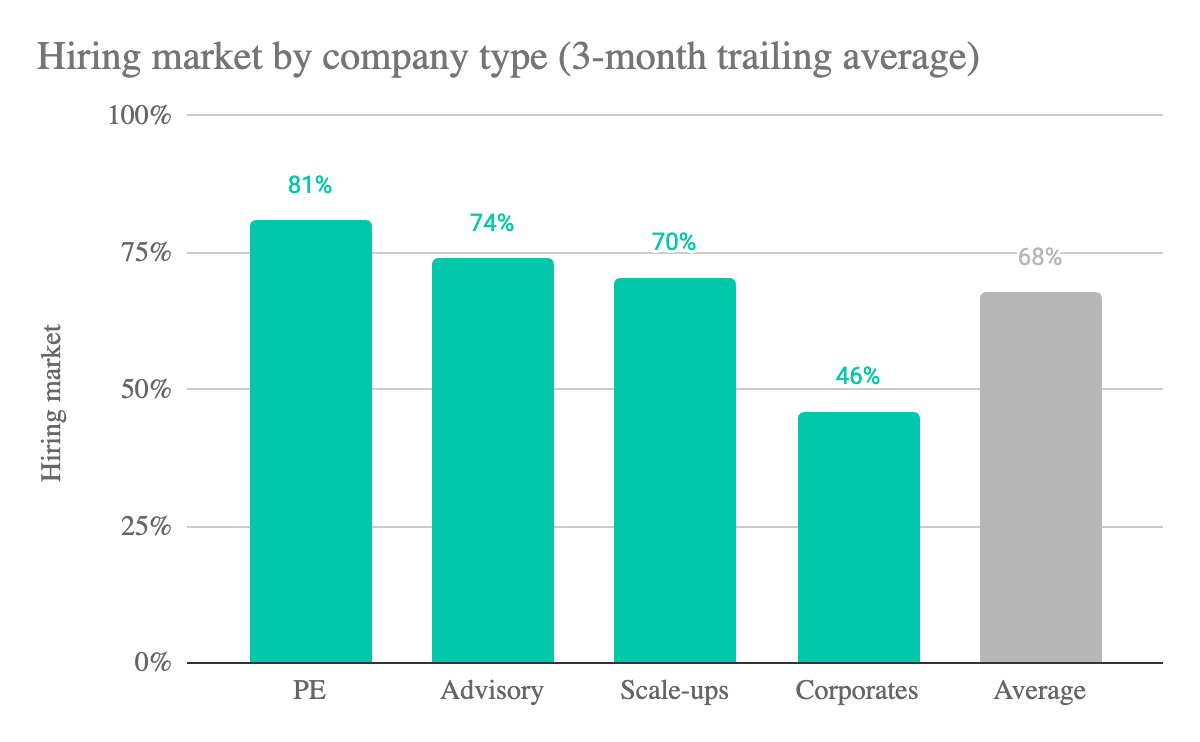
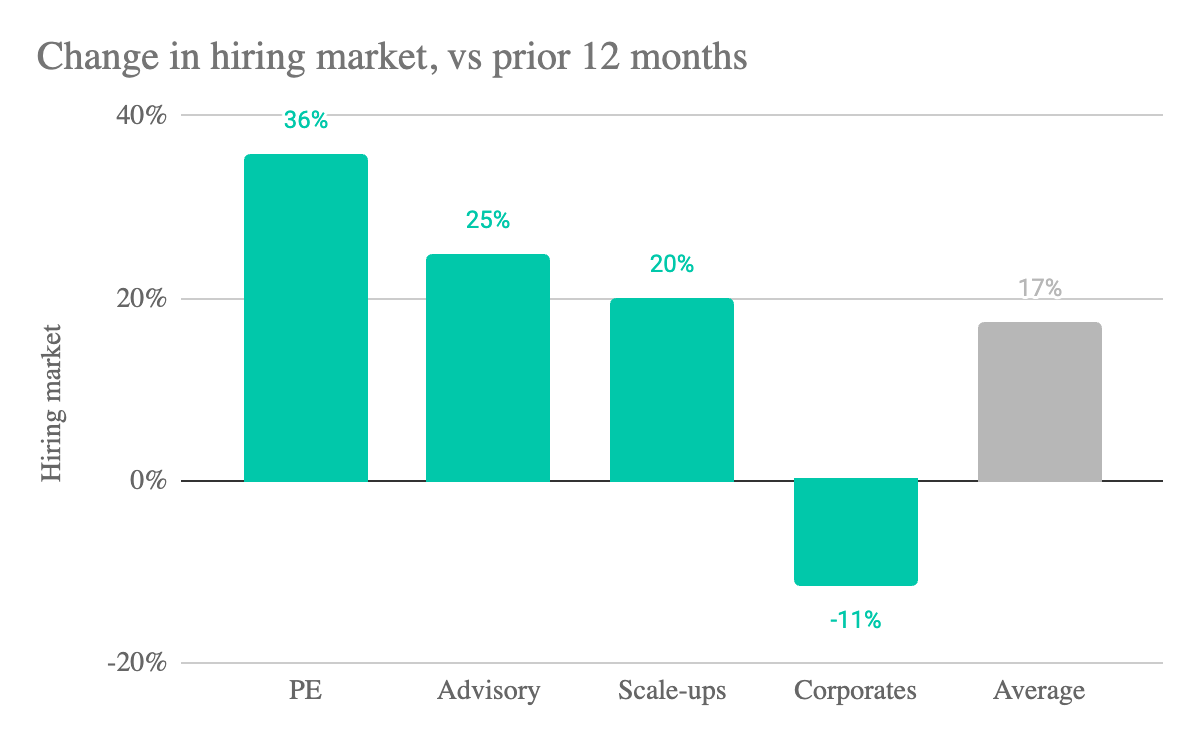
So what’s going on?
The risks posed to consulting by AI are widely discussed, and for good reason: At the heart of the consulting proposition lies the ability to synthesise complex data, interpret market intelligence and drive towards clear, actionable recommendations, precisely the areas where AI is advancing fastest. It’s not a question of if AI can outperform humans in these tasks, but when.
This advancement raises existential questions about the industry’s current operating model, particularly for leaders thinking about project staffing, protecting margins, and developing the next generation of partners. The immediate concern for many is how this is impacting talent in, or looking to join consulting firms- why hire more people if AI can do the same things more cheaply?
But this isn’t what we’re seeing. In fact, hiring demand is up within consulting.
Despite the noise around disruption, our data shows a very different short-term story. Hiring demand across the advisory sector has been rising sharply compared to last year. Initially, we hypothesised that this growth was concentrated in boutique firms, smaller, more agile players pivoting to build AI-focused propositions. If true, this would suggest not a real increase in overall demand, but rather a talent migration away from large consulting firms into specialist boutiques.
However, the numbers told a different story. Hiring demand has risen by 21 percentage points in large firms, and by a more modest but still significant 9 percentage points in boutiques. In other words, demand is not confined to specialists, it’s happening across the board.
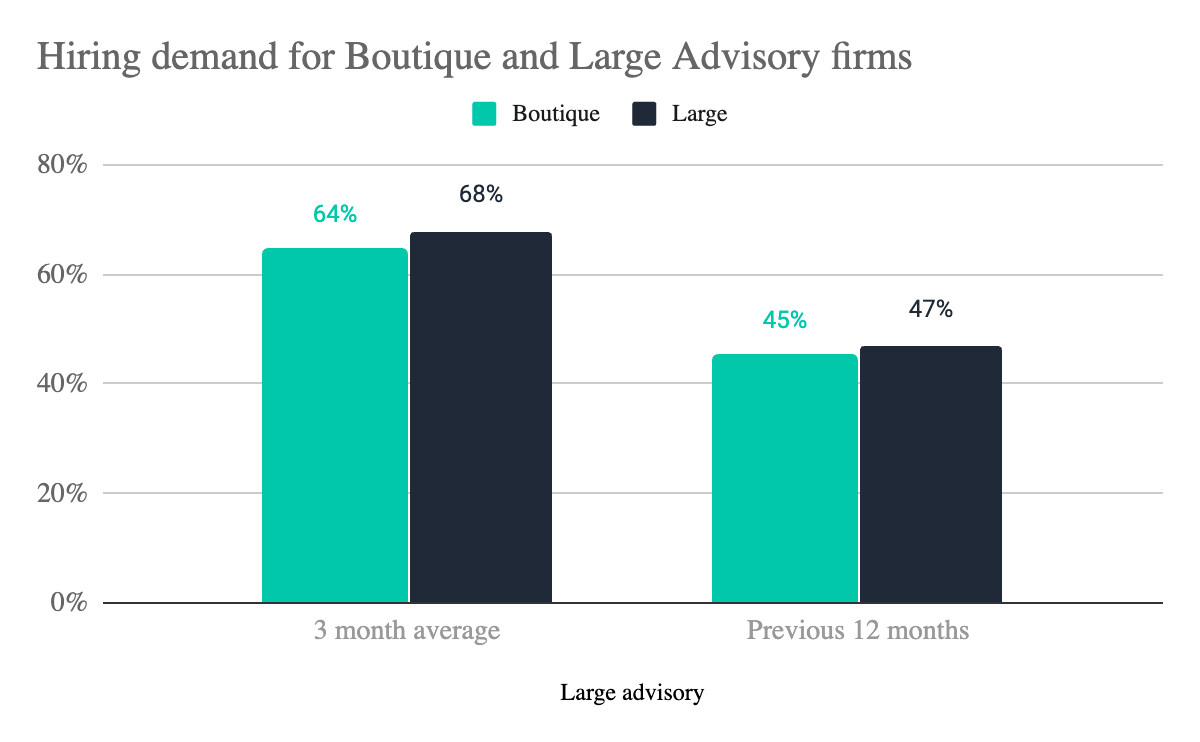
Why? Clients are grappling with the same questions about the impact of AI
This trend points to a critical dynamic: The immediate impact of AI on consulting has been overstated. For many firms, the boom is being fuelled by client demand for guidance on exactly the issues senior leaders are worrying about themselves:
• How to integrate AI into core operations.
• What it means for workforce design and resourcing.
• Where value creation opportunities lie in an AI-enabled world.
Implications for consulting leaders
This raises three important considerations for leaders in the consulting industry:
1. Delivery models are shifting, but they’re not collapsing
While AI will automate traditional “analyst tasks,” the near-term demand is for advisory capacity, client guidance, and operating model design. This creates space for firms to rethink the shape and scale of delivery teams, rather than fearing their wholesale replacement.
2. Margins are still defensible, but only when value add is clear
Clients are willing to invest in external expertise, but expectations are shifting. Firms must be ready to demonstrate the distinctive value of human insight alongside AI-driven efficiency, ensuring pricing models reflect both. We see this playing out in the mandates we see from consulting clients, most of whom are looking for deep expertise in a specific functional or industry area, not general capacity augmentation.
3. Talent development cannot be an afterthought
If the AI evolution continues as expected, the real long-term risk is not staffing cuts, it’s a potential skills gap. If AI erodes the traditional training ground of junior consultants, firms will need to ensure the next generation develops judgement, nuanced thinking, client relationship development skills and leadership capability.
Is this a temporary uptick, or a longer term hiring trend?
The jury’s still out on whether this demand surge is a short-lived reaction to AI uncertainty or the beginning of a new growth curve for consulting. But one thing is clear, in the short term, the consulting sector is experiencing a boom, not a bust.
Consulting leaders should resist the temptation to over-correct. Instead, they should focus on building hybrid models, protecting margins through clear value articulation, and reimagining training for future leaders.
What’s certain is that AI will reshape consulting, but for now it’s fuelling demand, not reducing it.
Where talent meets opportunity





Our latest articles
The Strategy and Transformation Hiring Index closed Q2 2026 at 39 - its highest reading since October 2023. This has been driven primarily by freelance hiring demand in Private Equity, but momentum in corporate and advisory is also growing.
We’ve seen a structural shift in the composition of demand over those 2.5 years, with companies preferring to bring in expertise on an interim basis. A second shift is visible in the mandates themselves - a quarter of the roles that went live with us in Q2 2026 mention AI in the job description, against roughly one in six a year ago.


Fifty people, one former CEO of Xero, Apple Asia Pacific, Ninemsn and Microsoft ANZ. The Movemeon Group brought together a small group of clients, network members and friends of the firm in Sydney for a fireside chat between Steve Vamos and Movemeon co-founder Richard Rosser, introduced and closed by Pete Clifton-Smith (GM APAC, The Movemeon Group), with closing remarks from Richard Whiteoak (MD, Whiteoak Private Equity).
The brief was simple: what does it actually take to lead, and to lead well, through constant disruption? What followed was one of the clearest, most practical breakdowns of the CEO role that anyone in the room had heard.

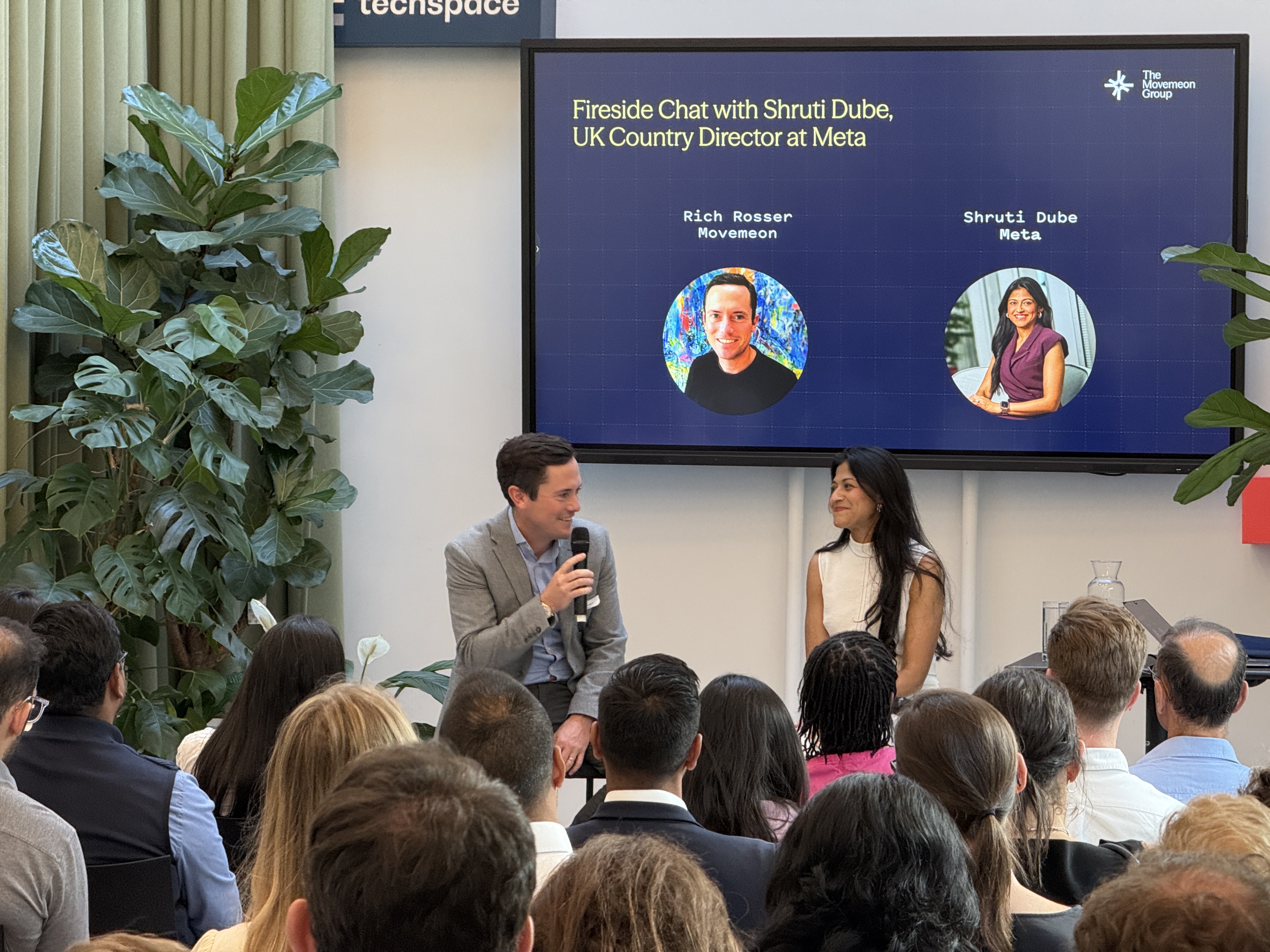
Meta UK's chief exec (ex-McKinsey, ex-Sequoia) shares a career framework built on rising complexity and expanding influence rather than titles, plus advice to stay close enough to real work to catch mistakes, including bad AI outputs. She ties this to Meta's strategy: WhatsApp agents aim to restore personal trust at scale, AI is expanding jobs rather than cutting them, and targeted fixes beat blanket bans.

Join our ecosystem to discover unique opportunities and advice
100,000+