Freelance interview - from McKinsey to the non-profit sector
Here’s a guest blog from one of our freelance members – Helen, a former McKinsey Consultant whos moved into the non profit sector. Click here to view.


One of the key aims of MMO Freelance is to help our freelance members connect with each other. Through freelance events, guest blogs and personal introductions, we’re hoping to create a freelance network that is better connected and hopefully able to lend a helping hand to each other through project leads, introductions, or just a Friday beer.
Here’s a guest blog from one of our freelance members – Helen, a former McKinsey Consultant.Are you looking for a freelance opportunity as well? Click here to browse all our live jobs
How long have you been a freelance consultant? & what is your industry focus?
I’ve been a freelancer for just over 18 months. I focus on the non-profit sector, which includes government, public sector, big charities (mostly international NGOs because that’s my professional background) and some philanthropic organisations.
Why did you decide to become a freelance consultant?
It was a long process, actually. I was working at Comic Relief, my previous role, on a temporary basis – I had agreed to go and help them set up Red Nose Day in America. It was always on a part-time basis, and I was approaching the end of that contract, and starting to think about what I wanted to do next. I was quite clear that I wanted to do more of a portfolio of things: continue with the strategy work because I loved it, but also increase the amount of creativity and the number of workshops I was doing.So I decided to go freelance for two reasons:•more flexibility, being able to work in a different way ;•The variety of things I wanted to achieve was difficult in a ‘traditional’ role. I couldn’t find a job that did all the things I wanted to do, so I designed my own job instead.
What most surprised you about the change from perm to freelance?
Some things were as expected. The things that surprised me the most were how much I liked the flexibility. There was really no downside. I’d been a bit worried that there would be a negative aspect that I hadn’t anticipated. The freedom that comes with only representing yourself is really refreshing – I hadn’t really anticipated that, much as it is obvious looking back.
What one thing would you really want to know, If you were to just be considering the move to freelance consulting now?
I’d want to be really clear why I was making the transition because you have to manage your time really actively. When I went freelance, I wanted to be really flexible and have variety in my work. I didn’t want to be working full-time, and I wanted to work across a number of different projects at once. I could have taken the first project that came along, a 6-month project with one client. That would technically also have been freelance, but it would not have fulfilled any of the goals I had. So being really clear why you want to move into freelance work, and then building your career around that, is really important.
One main pro & one main con of freelance consulting?
Pro: Flexibility. I’m very fortunate to be able to work from almost anywhere and on almost anything.Con: Zero visibility of what’s coming down the pipe. Again, you have to be really comfortable with uncertainty. For me, that’s partly by design, as I chose to do a model where I was working across multiple clients at the same time rather than working on one big project. If I’d done the one big project model, it would have been easier to create a project pipeline because you can say “well, I have 3 months until the end of my project so I will start to look for work.” Whereas as it is, that would be really hard because I’m always doing something for someone and that work goes up and down in its intensity. So it’s difficult to build in future-proofing and know a long time in advance when I will be able to take on more work.
Would you consider going back to perm?
I don’t think I’d go back to permanent consulting, but I would go back to other permanent work, were the job right. It’s about knowing what you want. I’m pretty clear what the job would have to look like and I’m not sure it exists at the moment!
Looking for a freelance opportunity?Click here to have a look at our live jobs
Not a member yet?Click here to create a free account
Where talent meets opportunity





Our latest articles
The Strategy and Transformation Hiring Index closed Q2 2026 at 39 - its highest reading since October 2023. This has been driven primarily by freelance hiring demand in Private Equity, but momentum in corporate and advisory is also growing.
We’ve seen a structural shift in the composition of demand over those 2.5 years, with companies preferring to bring in expertise on an interim basis. A second shift is visible in the mandates themselves - a quarter of the roles that went live with us in Q2 2026 mention AI in the job description, against roughly one in six a year ago.


Fifty people, one former CEO of Xero, Apple Asia Pacific, Ninemsn and Microsoft ANZ. The Movemeon Group brought together a small group of clients, network members and friends of the firm in Sydney for a fireside chat between Steve Vamos and Movemeon co-founder Richard Rosser, introduced and closed by Pete Clifton-Smith (GM APAC, The Movemeon Group), with closing remarks from Richard Whiteoak (MD, Whiteoak Private Equity).
The brief was simple: what does it actually take to lead, and to lead well, through constant disruption? What followed was one of the clearest, most practical breakdowns of the CEO role that anyone in the room had heard.

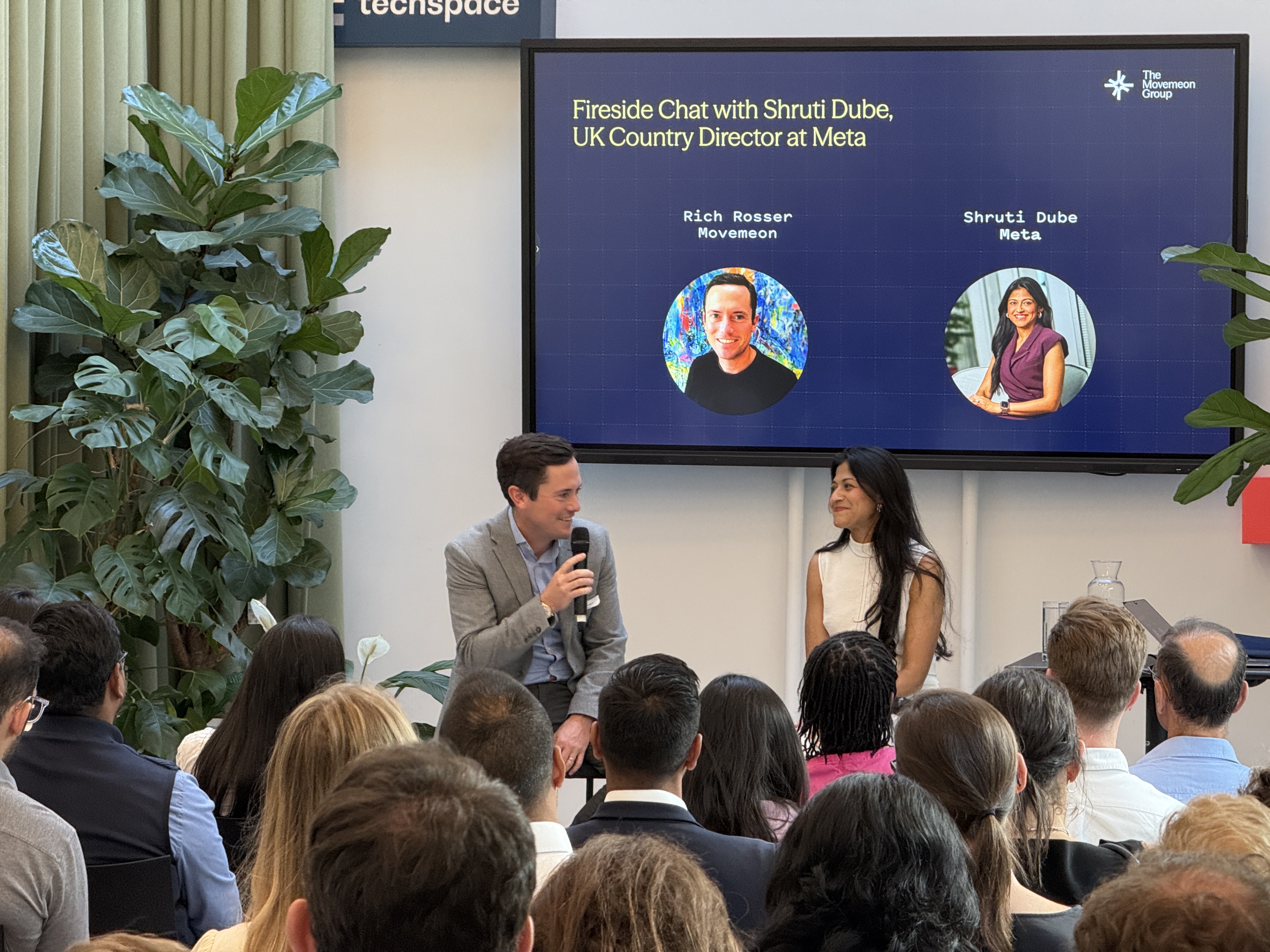
Meta UK's chief exec (ex-McKinsey, ex-Sequoia) shares a career framework built on rising complexity and expanding influence rather than titles, plus advice to stay close enough to real work to catch mistakes, including bad AI outputs. She ties this to Meta's strategy: WhatsApp agents aim to restore personal trust at scale, AI is expanding jobs rather than cutting them, and targeted fixes beat blanket bans.
Join our ecosystem to discover unique opportunities and advice
100,000+