The real job of a CEO: Inside The Movemeon Group's fireside chat with Steve Vamos
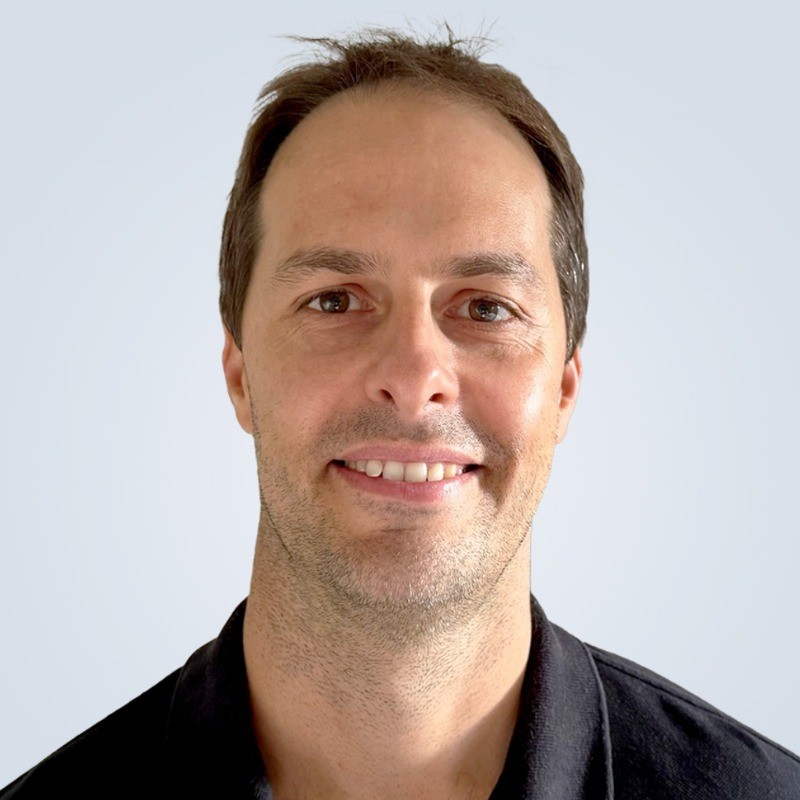
Fifty people, one former CEO of Xero, Apple Asia Pacific, Ninemsn and Microsoft ANZ. The Movemeon Group brought together a small group of clients, network members and friends of the firm in Sydney for a fireside chat between Steve Vamos and Movemeon co-founder Richard Rosser, introduced and closed by Pete Clifton-Smith (GM APAC, The Movemeon Group), with closing remarks from Richard Whiteoak (MD, Whiteoak Private Equity).
The brief was simple: what does it actually take to lead, and to lead well, through constant disruption? What followed was one of the clearest, most practical breakdowns of the CEO role that anyone in the room had heard.

Leadership is change
Steve opened with the idea that anchors everything else he had to say: leadership and change are the same thing. There is no leader worth remembering who wasn't, fundamentally, a leader of change, and that means the single capability every executive needs more of is simply being good at change itself.
That need is intensifying. Rich shared a reflection from a conversation with Kate Smaje (McKinsey's global AI lead, who joined The Movemeon Group for a similar fireside in London the week before): a year now feels like what three years used to feel like. The pace has changed the job.
It's also a job nobody actually teaches you. Steve's analogy: being a CEO is like being a ball in a pinball machine - launched in, bouncing off experience, hoping to hit the right targets often enough to learn something. Every other discipline (finance, law, marketing, even sport) has fundamentals you drill from day one. The CEO role doesn't. You arrive as a functional superstar and are suddenly expected to operate across everything, with no warm-up and a world that keeps moving under you.
The real job: fixing misalignment
The most striking idea of the night traced back to Steve's first CEO role, running Ninemsn at the dawn of the digital media age, a business he took on knowing nothing about advertising or media. For the first time in his career, he was the least knowledgeable person in the room. So for two years, he did one thing: he listened, and he fixed what was getting in people's way.
What he was fixing, he realised, was misalignment between the service and what customers wanted, between people and what the organisation needed from them, between processes and the outcomes those processes were meant to produce. It was everywhere, and no one else in the business was positioned, or empowered, to fix it.
"That is the job of a CEO. Most don't apply themselves to it enough."
Two and a half years later, Ninemsn was the industry leader, with a culture that was the envy of the market. Steve's takeaway wasn't about the outcome, it was about what the job actually is. Strategy, in his framing, is the ongoing work of closing the gap between where you are and where you want to be. There is no finish line. The day a CEO believes they've arrived is the day it's time to hand over.
What only a CEO can do
Beyond fixing misalignment, Steve pointed to two other things that sit uniquely with the top job:
Clarity of purpose and priorities. Every functional leader has strong, well-founded opinions about what their function needs. A great organisation requires every one of them to suboptimise their function for the good of the whole, something nobody is naturally inclined to do, and something only the CEO can broker.
Driving intention into action. This, Steve argued, is the piece most CEOs underdo. Alignment on priorities at the top means nothing if it doesn't translate into coordinated, cross-functional execution - real ownership, real resourcing, not "best endeavours" commitment. He described sitting with a group of CXOs where one executive proudly said his CEO had the whole company aligned on purpose and priorities, until Steve described the cascading, cross-functional test, at which point the executive realised his own function wasn't actually synchronised with anyone else's. Alignment at the top had never made it into the machine.
His advice for leadership meetings: strip out the functional status updates nobody in the room needs, and put someone in the CEO's corner whose job is to hold the organisation to account on follow-through.
Managing egos, and the cost of self-interest
Asked how to have the difficult conversations that suboptimising a function requires, Steve turned to Patrick Lencioni's work on self-centredness versus service orientation. Most executives, in a normal, non-threatened environment, will step up for the good of the whole. A few won't, and they're often very good at their jobs, which makes it harder.
He shared two personal stories: a talented Xero executive he ultimately had to move on, not because he was wrong, but because he wasn't right for that moment in the company's life; and a brilliant executive on his team who reacted badly to any challenge, until a conversation uncovered why and who, once she became conscious of the trigger, changed her behaviour so completely that she went on to become a CEO herself.
The thread through both: self-awareness is the precondition for everything else on this list.
Picking your battles, and the discipline of saying no
Rich raised the advice he was given early on: write the email, don't send it, 95% of the fights aren't yours to have. Steve agreed, tying it to the discipline he most admired in Steve Jobs' return to Apple: not the innovation the world remembers, but the operational courage to kill products and be laser-focused.
"Focus is about saying no. And the challenge is you're saying no to good people with good ideas."
The trap, as Steve described it, is giving everyone a little instead of giving a few enough, and it's compounded by the fact that people underestimate how rarely their priorities actually land. Repetition matters, but slogans don't survive contact with reality; leaders need to stay in the detail of execution, not just the campaign around it.
What actually stands out on the path to the top
Asked what differentiates people heading toward senior leadership, Steve's answer had nothing to do with pedigree: people who genuinely care about the organisation's success, and people who are good at change. He pointed to Rachel Powell, his former head of HR at Xero, later CEO of Magentus, who saw the need for a founder-to-CEO transition at Xero years before anyone else did, and who quietly engineered it.
Being good at change, Steve argued, is a personal discipline before it's a professional one: recognising fear, ego and conditioning in the moment, and choosing to pause and respond differently. On AI specifically, his advice was to let go of the illusion of control and lean into curiosity instead, while dismissing the idea that "we'll all be out of jobs" as nonsense no one can actually substantiate.
Self-awareness across the company lifecycle
A question from the floor, what makes a good CEO across a company's different phases, from founder to scale-up to maturity, drew one of the evening's most personal stories. Steve described advising Xero founder Rod Drury for around eighteen months, working through how product decisions, strategy planning and marketing operations needed to change as the company scaled. Rather than Steve pushing for a bigger role, Rod got there first: he told Steve he'd realised he wasn't the right person to take Xero to its next stage, that the company needed someone who liked process and people development in ways he didn't, and that Steve should be the one to do it.
What made it work, in Steve's telling, was that Rod had never built Xero to be an extension of himself. He built it to be a global tech company with New Zealand values, and because the company was never about him personally, he could recognise, objectively, when it was time to step back and hand over.
A simple framework for career decisions
Prompted for the career-planning framework he's shared with many in Movemeon's network, Steve laid out the questions an outplacement agency once took him through in his own career transition:
- What do you love, and what do you know, about work?
- What are your skills and strengths, and where do you need to develop?
- What are your criteria for the next move: family, location, money, position, the nature of the company?
- What pathways are realistically open to you, and what would each demand of you?
- Do you actually have access to this path, and what's the learning curve to get there?
Rich added three of his own observations from working across The Movemeon Group's network: 1) take stock deliberately once a year rather than drifting; 2) be realistic about the next move rather than the long-term aspiration - career change is a game of chess, not a leap; and 3) be explicit about what you're willing to compromise, and for how long, because a step that looks like a step back is often the fastest route forward.
Holding the line, and knowing when to let go
On knowing when to persevere versus change course entirely, Steve was candid that there's no formula - only judgment sharpened by experience, and a refusal to fall in love with anything. He described killing Xero products with loyal followings once it was clear they didn't belong in the company's long-term future, not because the diagnosis was hard, but because making the call was.
Rich connected this to a conversation with Nicola Mendelsohn, former CEO of Meta in the UK, who argued the core of the CEO role is the ability to make decisions on imperfect data, continuously, and that postponing a decision is often worse than making the wrong one.
The human side of disruption
Asked what qualities leaders need most as change accelerates, Steve was direct: technology has never disrupted an industry, people have. The gap between how leaders think and what technology now enables is widening, and the only way to close it is to double down on the human elements of leadership: mindset, honesty, and the willingness to have difficult conversations, because change happens through words and nothing else.
Rich cited Kate Smaje again: that for every dollar invested in AI technology, organisations need three to four dollars invested in their people to see it show up on the top and bottom line, and that the most forward-thinking Chief HR Officers are now spending the bulk of their time thinking about how they manage an increasingly "agentic" workforce.
Two things Steve believes remain distinctly human, at least for now: accountability, and the capacity to benefit from outcomes in a real, material sense.
Closing thoughts
Closing the evening, Richard Whiteoak drew a direct line between Steve's themes and Whiteoak's own experience backing founders through leadership transitions - including a recent CEO placement, sourced through The Movemeon Group, that transformed one of their portfolio companies. He offered a simple illustration: of two similarly successful restaurant-chain founders he'd recently met, the one who invested was the one who was open to the idea that something might need to change, not the one who insisted everything was already perfect.
It was, fittingly, a note that echoed the evening's central idea. The best leaders aren't the ones with the most answers. They're the ones most willing to keep changing.
The Movemeon Group will be running more events like this one. If you'd like to hear about upcoming fireside chats, or want to learn more about OnUpBeyond coaching programme, get in touch with the team.
Where talent meets opportunity





Our latest articles

The Strategy and Transformation Hiring Index closed Q2 2026 at 39 - its highest reading since October 2023. This has been driven primarily by freelance hiring demand in Private Equity, but momentum in corporate and advisory is also growing.
We’ve seen a structural shift in the composition of demand over those 2.5 years, with companies preferring to bring in expertise on an interim basis. A second shift is visible in the mandates themselves - a quarter of the roles that went live with us in Q2 2026 mention AI in the job description, against roughly one in six a year ago.

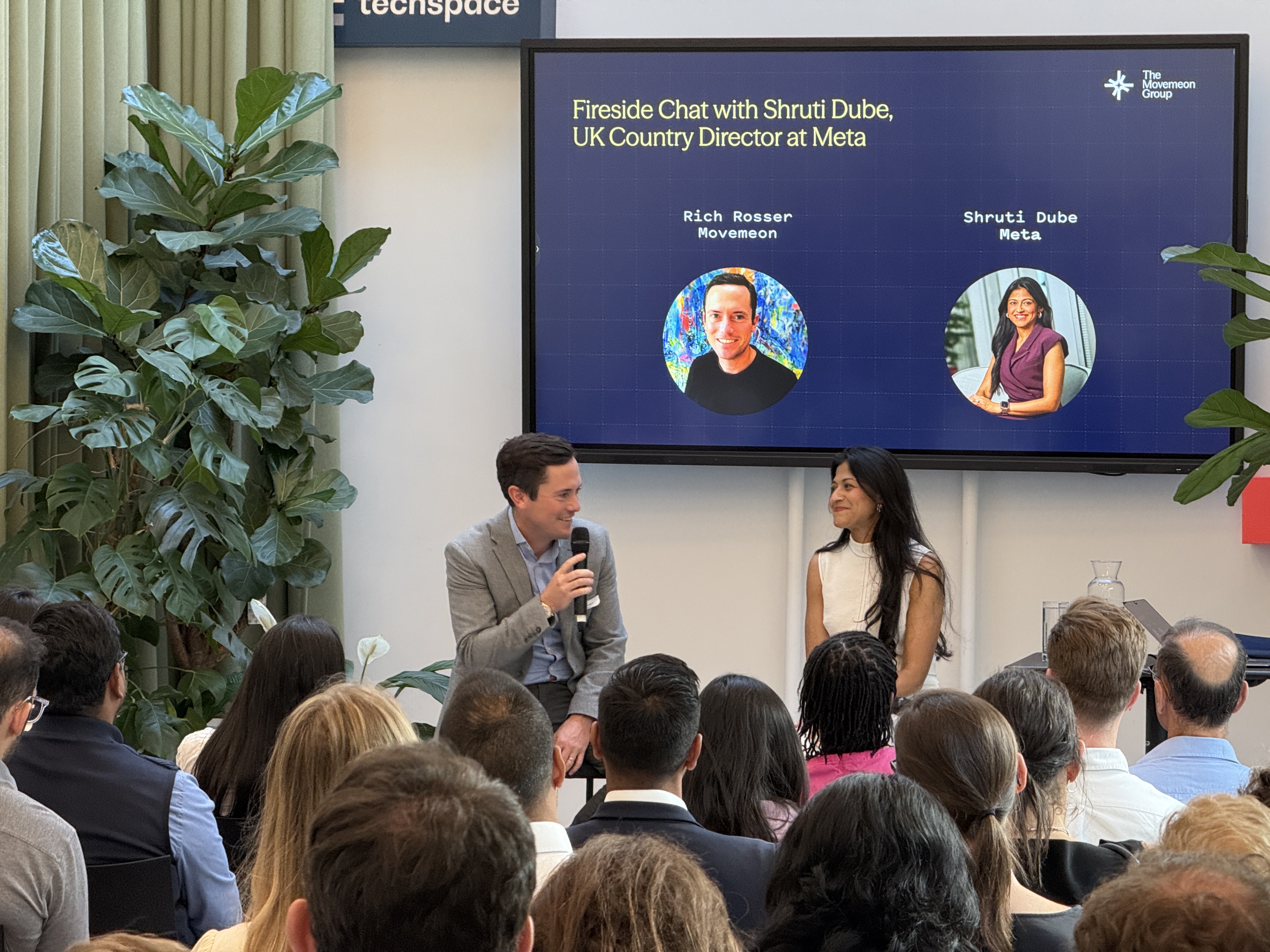
Meta UK's chief exec (ex-McKinsey, ex-Sequoia) shares a career framework built on rising complexity and expanding influence rather than titles, plus advice to stay close enough to real work to catch mistakes, including bad AI outputs. She ties this to Meta's strategy: WhatsApp agents aim to restore personal trust at scale, AI is expanding jobs rather than cutting them, and targeted fixes beat blanket bans.

%20(1).jpg)
The Chief of Staff role has become a key early hire in PE-backed portfolio companies, helping CEOs create leverage in the critical post-acquisition phase. It plays a central role in driving Value Creation Plan execution, strengthening investor communications, and improving leadership team effectiveness. This article explores why demand for the role has increased and what good looks like in practice.

Join our ecosystem to discover unique opportunities and advice
100,000+