Being a CEO: Strategies for Decision-Making and Success Redefined
What's it like being a CEO? Discover the realities of the role. From decision-making challenges to redefining success.

Enter your details and we'll take you straight to the download. We'll also email you a copy.
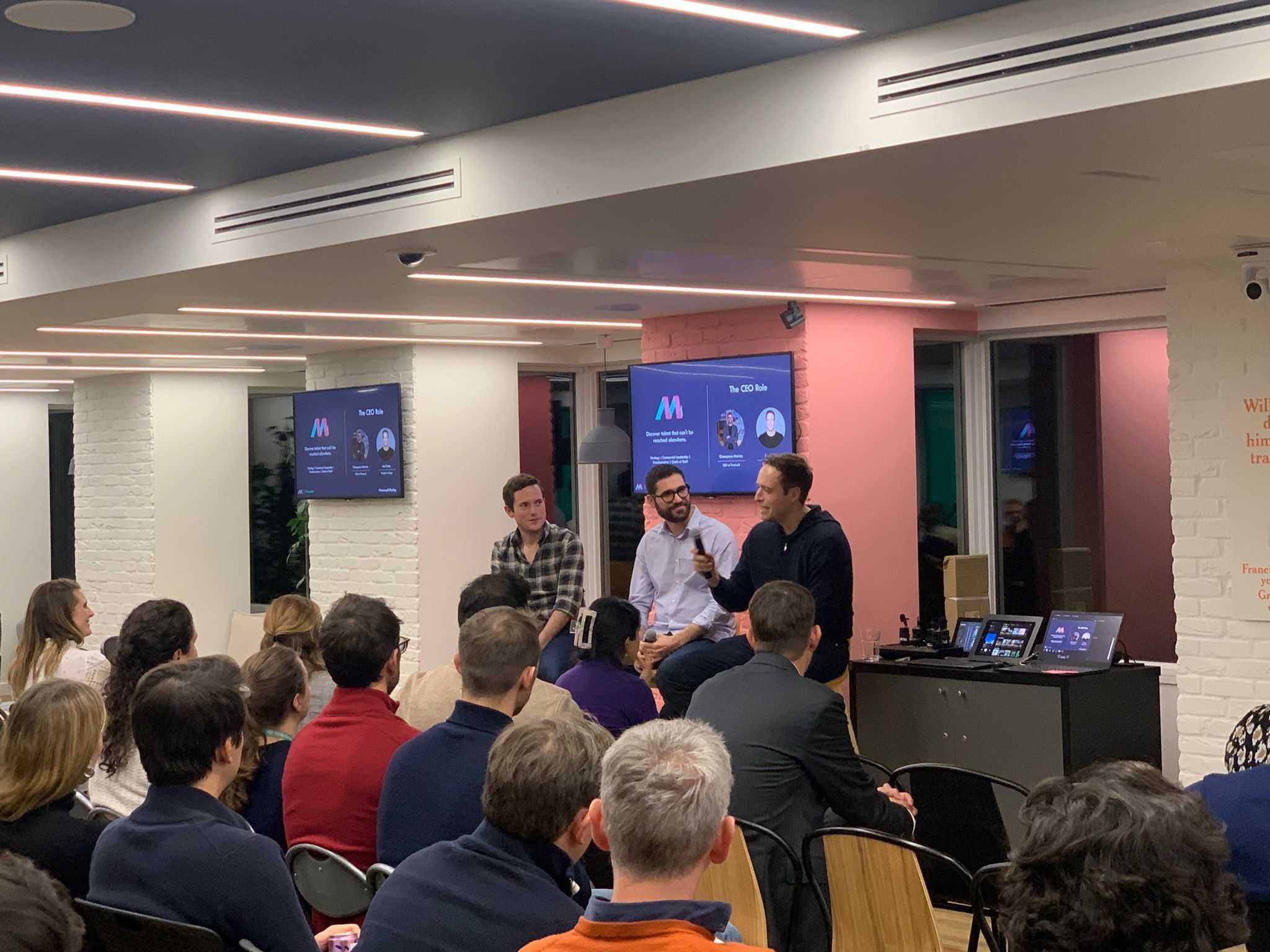
Ever wondered what it's like to be a CEO? It's likely you have, as so many CEOs have a consulting background. We asked Joe Falter (former CEO and founder of Jumia and founder of Zapp, ex-McKinsey) and Giampiero Marinò (CEO at Treatwell, ex-BCG) at our recent event with our hiring partners, Trainline.
Spoiler alert: it's not always glamorous. When it comes to senior leadership, simplicity takes centre stage, success in the CEO role can be measured by the success and autonomy of your leadership team.
Our data suggests more than half of ex-consultants have ambitions towards the C-Suite. Alongside this article, we have a host of great interviews with industry leaders.
Navigating the CEO Landscape
The Ultimate Decision-Maker:
At its core, being a CEO is about making decisions, often tough decisions. Simply put, it’s about effective capital deployment to further the business. Procrastination or avoidance only exacerbates challenges. Embracing this head-on is the essence of the job.
Resilience is imperative:
The position demands resilience. CEOs are faced with constant challenges, setbacks, and uncertainties. The ability to bounce back and navigate through turbulence is crucial for the role.
Juggling Stakeholders:
Balancing acts are part of the CEO's daily routine. Juggling investors, non-executives, and the senior team requires finesse.
Isolation and Networks:
Loneliness can seep into the CEO role, but building a network of confidantes in similar roles provides a crucial support system. Sharing insights and experiences becomes incredibly valuable in the face of isolation.
Success Redefined:
Success isn't about personal glory. It's when you feel redundant because your team is thriving independently. True success is when operational value becomes secondary to the team's autonomy.
Pearls of Wisdom
Competitor Awareness without Obsession:
Keeping an eye on competitors is crucial, but obsession narrows thinking. CEOs should seek to redefine categories rather than simply play in them. Innovation often lies beyond the boundaries set by competitors.
Over-Communication as Strategy:
Communication is the CEO's most potent tool. Over-communicating, especially about company culture and strategy, ensures everyone is on the same page. It's a relentless effort to align visions and foster unity.
Feedback-seeking Culture:
Creating a culture where feedback, both praise and constructive suggestions, flows freely is an art. CEOs must actively seek feedback, as people won't naturally provide it. It's a vital loop for personal and organizational growth.
Conclusion
As Giampiero said, “The CEO role isn't for everybody but if you’re naturally resilient and can juggle many balls, it can be an extremely rewarding place to find yourself.” Beyond the spotlight, CEOs craft success not for themselves, but for the independence of their teams and the continued improvement of their businesses.
About the event
Our largest community event to date, it was so brilliant to see so many Movemeon members in attendance. A big thank you to our hiring partners, Trainline, who hosted the event where these great insights were shared. As well as to our guest speakers: Joe, Giampiero, Sakshi and Matthias.
If you’d like more information about how Movemeon partners with organisations looking to grow their teams, get in touch by filling out the form below!
Interested in more content about the CEO role:
Enter your details and we'll take you straight to the download. We'll also email you a copy.
Want to talk about what this means for you?
Where talent meets opportunity





Our latest articles

The Strategy and Transformation Hiring Index closed Q2 2026 at 39 - its highest reading since October 2023. This has been driven primarily by freelance hiring demand in Private Equity, but momentum in corporate and advisory is also growing.
We’ve seen a structural shift in the composition of demand over those 2.5 years, with companies preferring to bring in expertise on an interim basis. A second shift is visible in the mandates themselves - a quarter of the roles that went live with us in Q2 2026 mention AI in the job description, against roughly one in six a year ago.


Fifty people, one former CEO of Xero, Apple Asia Pacific, Ninemsn and Microsoft ANZ. The Movemeon Group brought together a small group of clients, network members and friends of the firm in Sydney for a fireside chat between Steve Vamos and Movemeon co-founder Richard Rosser, introduced and closed by Pete Clifton-Smith (GM APAC, The Movemeon Group), with closing remarks from Richard Whiteoak (MD, Whiteoak Private Equity).
The brief was simple: what does it actually take to lead, and to lead well, through constant disruption? What followed was one of the clearest, most practical breakdowns of the CEO role that anyone in the room had heard.


Meta UK's chief exec (ex-McKinsey, ex-Sequoia) shares a career framework built on rising complexity and expanding influence rather than titles, plus advice to stay close enough to real work to catch mistakes, including bad AI outputs. She ties this to Meta's strategy: WhatsApp agents aim to restore personal trust at scale, AI is expanding jobs rather than cutting them, and targeted fixes beat blanket bans.
Treten Sie unserem Ökosystem bei, um einzigartige Möglichkeiten und Ratschläge zu entdecken
90.000+