PART 2 - How to build a high performing team from scratch
The second principle for building a high performing team is 'Cultivate an inspiring culture that maximizes individual and team performance.


Enter your details and we'll take you straight to the download. We'll also email you a copy.
Last time, we discussed the first of three principles that I’ve found to be essential for building a high-performing team. In this article, we’ll cover principle #2.
1. Attract and hire the right people, then set them up for success.
2. Cultivate an inspiring culture that maximizes individual and team performance.
3. Demonstrate servant leadership daily.
Principle #2. Cultivate an inspiring culture that maximizes individual and team performance.
Establish a WHY and a HOW early on.
Simon Sinek has a simple but profound model for inspirational leadership which he calls the Golden Circle and which he details in his Ted Talk. When applied to my new team, I saw the “Why” as our vision and reason for being, the “How” as our team values (the way we would conduct ourselves), and the “What” as our projects and initiatives.
Once my key leaders were hired, I flew them out to division headquarters for several days for our first team meeting. Besides inviting my manager, our division President, and other leaders and collaborators to speak, I also scheduled time for us to brainstorm our Vision and Values. The facilitation deck included questions such as:
- What problems are you passionate about solving?
- What are your superpowers?
- How is what you’re doing making you better?
- List three specific contributions our team will make to the broader organization.
- List why those contributions are important to our stakeholders.
- How will others’ lives be different after they have interacted with our team?
The brainstorming process allowed us to get to know each other, as professionals and as people. We also discussed and debated the critical needs of the organization and how we could most effectively meet those needs. Sometimes, the dialogue became quite passionate as different perspectives emerged, but this was exactly the point. The Vision and Values statement that resulted from these conversations became our north star and served us numerous times when key decisions had to be made or when the going was hard. It gave us strategic intent, an identity we were proud of, and formed the foundation of our team culture.
Lean into the strengths of every team member while creating synergies.
I’m a believer that all of us can do more than what our titles indicate and that we each have untapped potential. Cultivating a culture of diversity, inclusion, and belonging requires embracing the unique strengths and potential that every member of the team brings and creating opportunities for them to grow and shine. For example, my team included leaders with titles like Director and Manager, but also Executive Assistant. In the case of the latter, instead of asking my executive assistant to focus exclusively on administrative responsibilities, I invited her to contribute in material ways to our team’s key initiatives. Of course, she demonstrated both the interest in and ability to do so. Early on, I informally retitled her to “Team Ninja / SWAT Lead” on our team’s presentation materials. It was a playful gesture but also an intentional signal to her and to others of her role and value on the team. We subsequently discussed her career trajectory and possible next roles based on her interests and strengths.
Cultivating an inclusive culture also means respecting the individual expertise of team members. My team was unique in that we had functional areas not typically found within the same organization and I was not a deep subject matter expert in these areas. Therefore, my role as a leader was often to ask insightful questions, provide the right guidance and guardrails, remove barriers, and champion the team while leaving the details to the experts.
Additionally, because I had a bigger picture lens on the business, I identified opportunities for collaboration within the team so that despite seemingly disparate swim lanes, the cross-pollination made the efforts of each team member stronger than they otherwise would have been. As a result, my team felt valued, supported, and connected. A point of pride that we all share is how frequently colleagues across the company commented on the outsize impact of our team compared to our relatively small headcount.
Provide coaching and feedback with care and intentionality. Address issues quickly and fairly.
As leaders, we will all confront situations that require immediate feedback and course correction. For example, if a critical project was off-track or repeated conflict within the team was hindering morale and productivity, I have stepped in to provide redirection. These are delicate moments and I certainly have had my share of stumbles. However, by taking a caring and respectful approach that seeks to accurately understand the situation, assumes positive intent, and then provides direction so every member of the team be more successful, I’ve found that these challenging moments can become growth opportunities for the team – both individually and collectively.
Most of the time, however, we are not dealing with crises but helping our teams to perform at a higher level in their day-to-day which requires that we operate as coaches. I’ve grown significantly in this skillset over the past two years. Many leaders’ natural inclination, my own included, is to give advice based on our own experience or problem-solve when our team comes to us for help. But what I’ve found to be much more effective is taking an “inside out” approach that empowers team members by asking them to clarify what they’re trying to achieve, articulate the challenges they’re confronting, brainstorm their own solutions, and then own the path forward. A model I recommend is called GROW Coaching based on the expertise of Alan Fine, which I was introduced to by the leaders on my own team who are phenomenal coaches in their own right.
Summary
A high performing team is one in which team members are motivated to go the extra mile and where the whole is greater than the sum of the parts. This is only possible when there is an inspiring and healthy culture in place. Establishing a clear vision and values, maximizing on the potential of the team as individuals and as a unit, and creating a strong cadence of coaching and feedback are some key steps we can take as leaders to create a winning culture where those we lead consistently exceed expectations and deliver extraordinary impact.
Next time, we’ll discuss how demonstrating servant leadership daily is another critical factor in building a high performing team.
Author: Li Kehl
Whether you are ready to hire through Movemeon or just looking for more information about hiring, one of our team of friendly specialists will get in touch within 24hrs.
Are you a candidate? Join Movemeon for free.
[hubspot portal="25392842" id="519fa7a4-9f5d-4fc1-9cce-40d189b9a881" type="form"]
Enter your details and we'll take you straight to the download. We'll also email you a copy.
Want to talk about what this means for you?
Where talent meets opportunity





Our latest articles

The Strategy and Transformation Hiring Index closed Q2 2026 at 39 - its highest reading since October 2023. This has been driven primarily by freelance hiring demand in Private Equity, but momentum in corporate and advisory is also growing.
We’ve seen a structural shift in the composition of demand over those 2.5 years, with companies preferring to bring in expertise on an interim basis. A second shift is visible in the mandates themselves - a quarter of the roles that went live with us in Q2 2026 mention AI in the job description, against roughly one in six a year ago.


Fifty people, one former CEO of Xero, Apple Asia Pacific, Ninemsn and Microsoft ANZ. The Movemeon Group brought together a small group of clients, network members and friends of the firm in Sydney for a fireside chat between Steve Vamos and Movemeon co-founder Richard Rosser, introduced and closed by Pete Clifton-Smith (GM APAC, The Movemeon Group), with closing remarks from Richard Whiteoak (MD, Whiteoak Private Equity).
The brief was simple: what does it actually take to lead, and to lead well, through constant disruption? What followed was one of the clearest, most practical breakdowns of the CEO role that anyone in the room had heard.

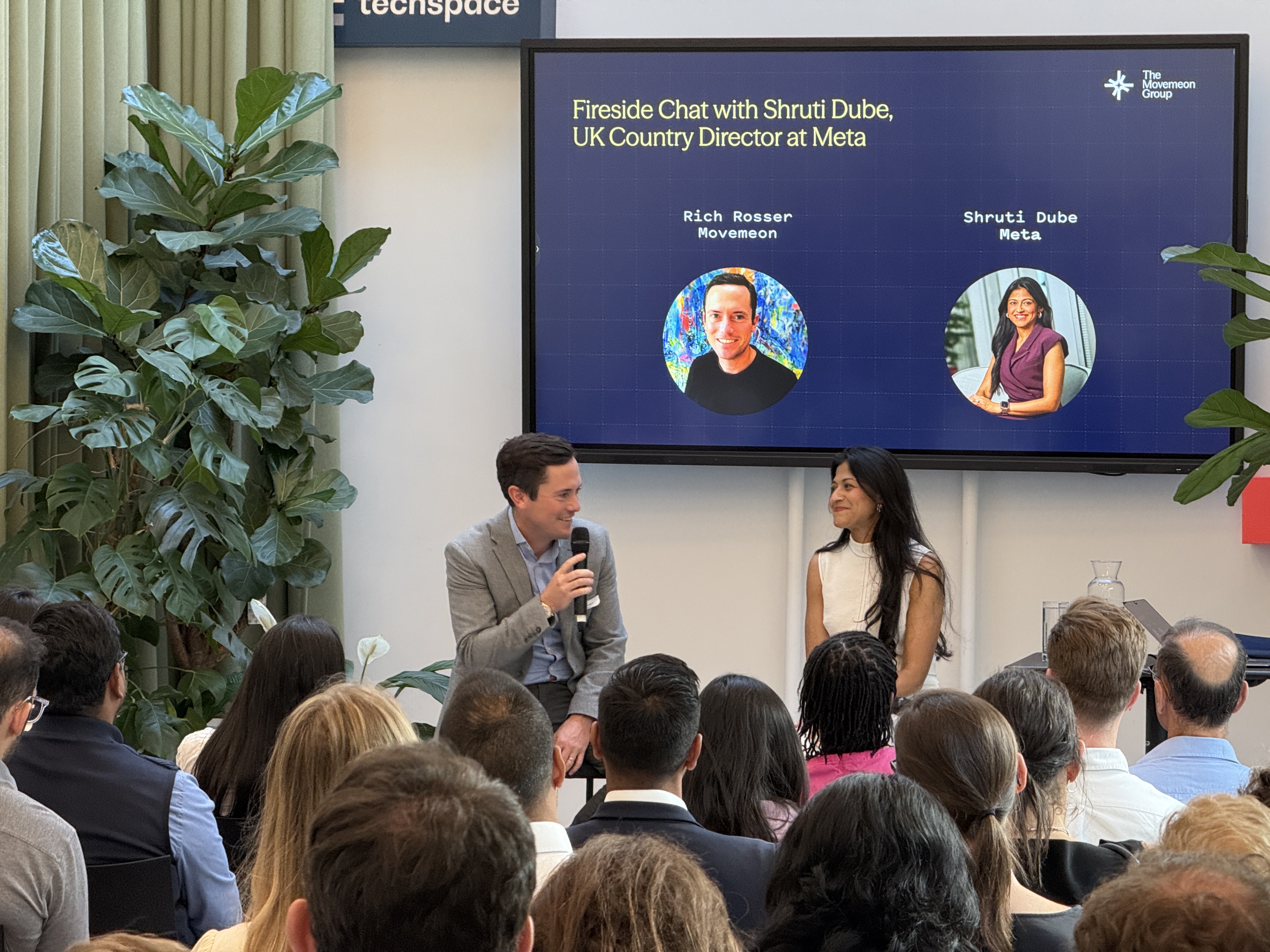
Meta UK's chief exec (ex-McKinsey, ex-Sequoia) shares a career framework built on rising complexity and expanding influence rather than titles, plus advice to stay close enough to real work to catch mistakes, including bad AI outputs. She ties this to Meta's strategy: WhatsApp agents aim to restore personal trust at scale, AI is expanding jobs rather than cutting them, and targeted fixes beat blanket bans.
Treten Sie unserem Ökosystem bei, um einzigartige Möglichkeiten und Ratschläge zu entdecken
90.000+